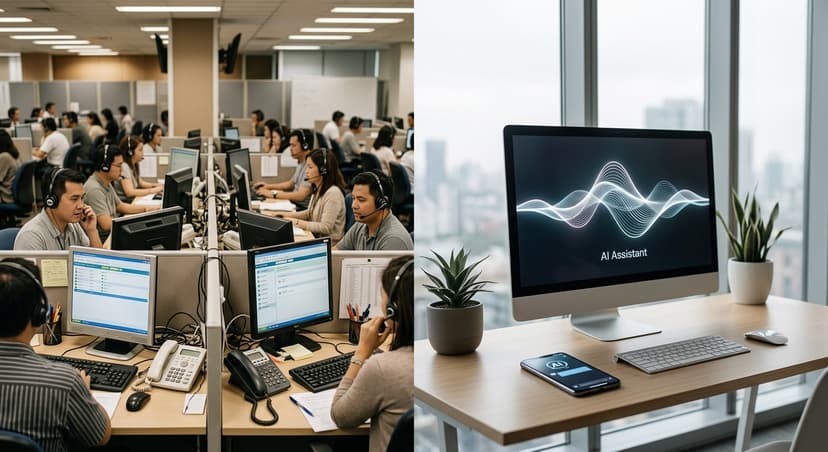
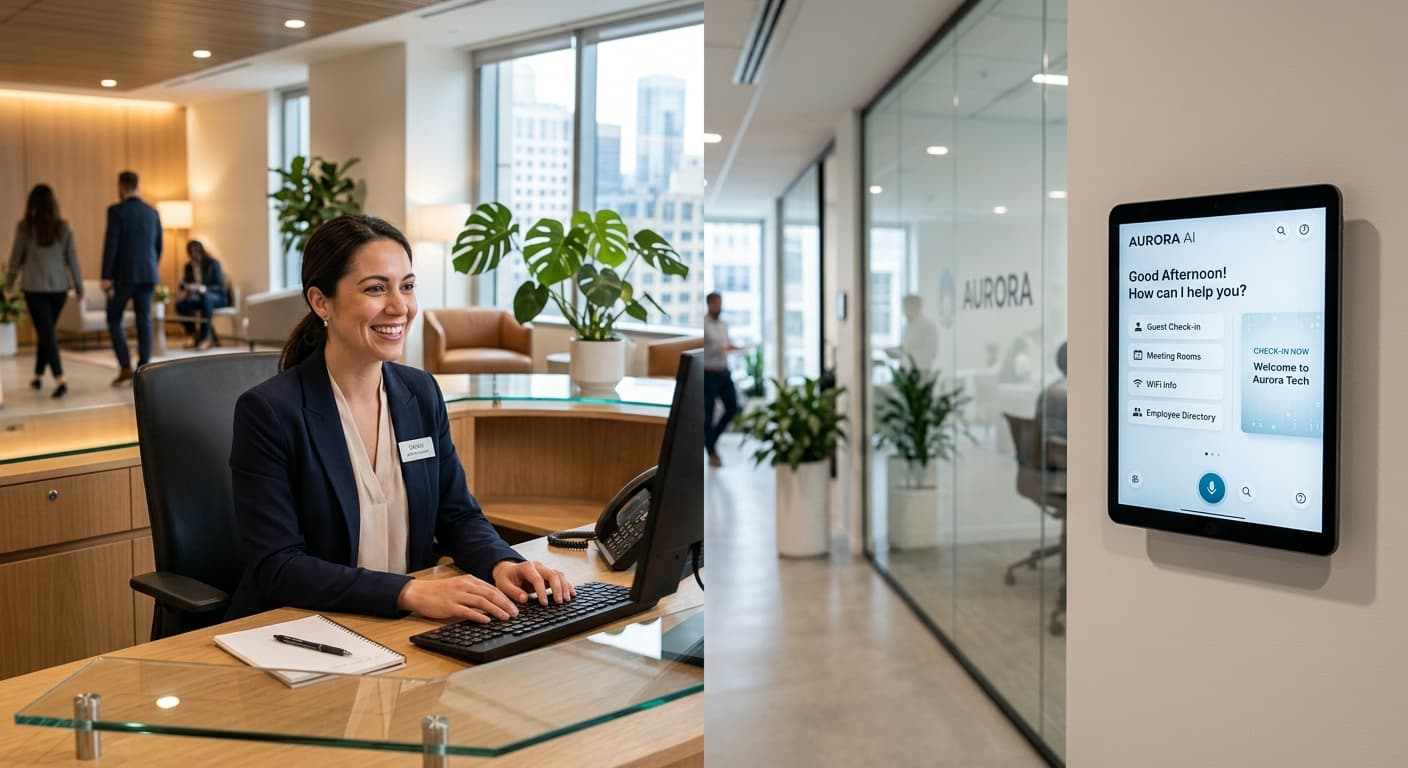
The decision between hiring a human receptionist and deploying an AI one isn't as straightforward as "AI is cheaper." Both have real strengths. But the gap is closing fast — and for most small to mid-size businesses, the math has already tipped decisively toward AI.
Let's break down the honest comparison.
Cost Comparison
A full-time receptionist in the United States costs between $35,000 and $50,000 per year in base salary. Add payroll taxes, health insurance, PTO, training, and turnover costs, and you're looking at $50,000 to $70,000 all-in.
An AI receptionist through a platform like RevSquared starts at $147 per month with a 7-day free trial. That's $1,764 per year — roughly 2% of the cost of a human.
That's not a marginal savings. That's an entirely different category. And when you consider the true cost of missed calls that a single human receptionist inevitably lets slip through, the gap widens even further.
Availability and Scale
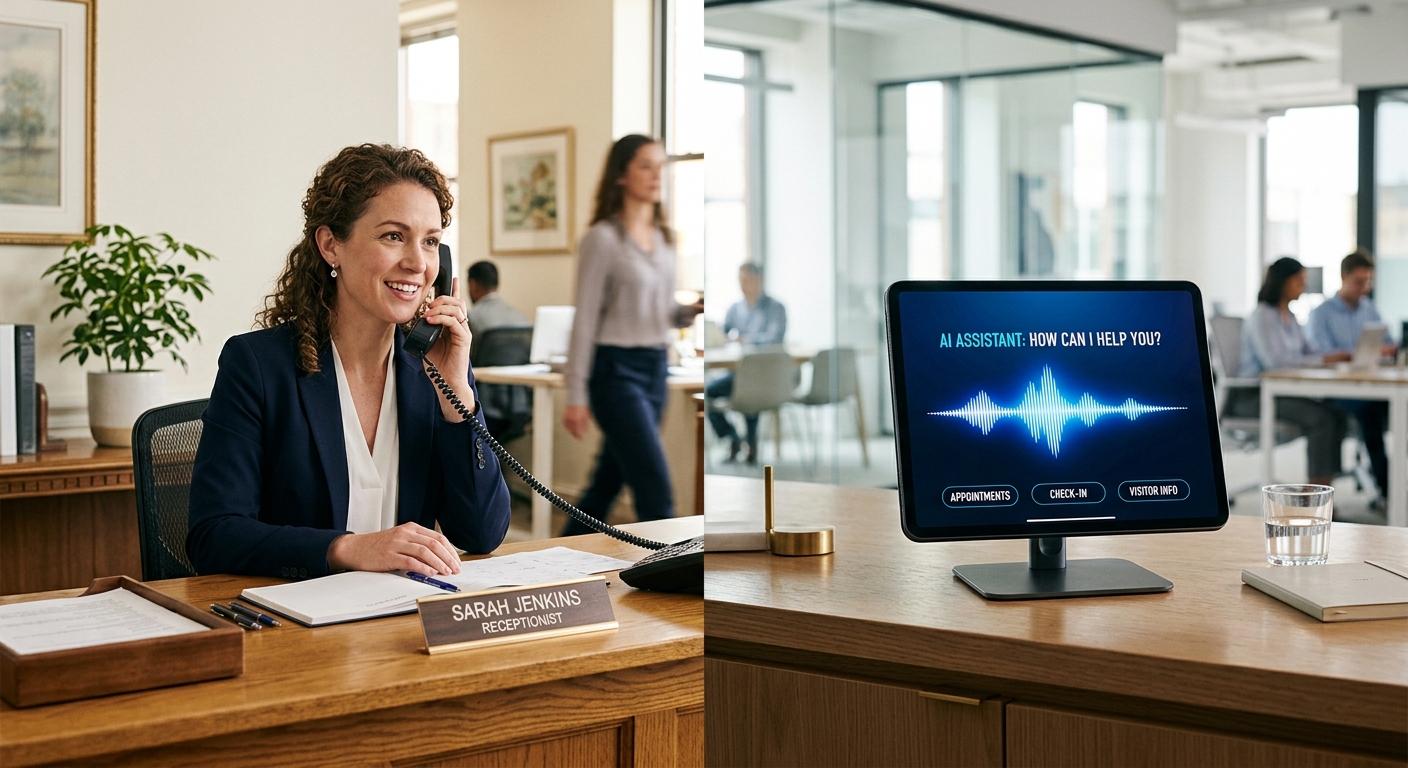
A human receptionist works 8 hours a day, 5 days a week. They take lunch breaks, sick days, and vacations. They handle one call at a time — when a second call comes in, it goes to voicemail.
An AI receptionist works 24 hours a day, 365 days a year. It handles 20 concurrent calls simultaneously. It never calls in sick, never takes PTO, and never has a bad day that affects call quality.
For businesses that get after-hours calls — which is 100% of businesses with a phone number — the AI covers time slots that a human physically cannot.
Conversation Quality
This is where the honest nuance matters. A great human receptionist brings empathy, intuition, and the ability to handle truly unusual or emotionally charged situations in ways AI still can't match perfectly.
However, the gap is much smaller than most people assume. Modern AI receptionists built on large language models hold natural, context-aware conversations that most callers can't distinguish from a human. They know your services, your pricing, your hours, and your booking flow. They don't forget information, they don't get flustered during busy periods, and they deliver consistent quality on every single call.
The data backs this up: well-configured AI receptionists convert at approximately 85% the rate of a top-level human rep. When you factor in that the AI never has an off day, never gets distracted, and handles 20 calls at once, the aggregate conversion performance often exceeds what a single human receptionist delivers.

Training and Improvement
Training a human receptionist takes weeks. They need to learn your business, your processes, your common questions, and your preferred responses. When something changes — new services, new pricing, new hours — you need to retrain them.
An AI receptionist gets "trained" in about 5 minutes. You describe your business, and the AI builds a custom prompt tailored specifically to your operations. When you need to make changes, you just tell it what to adjust in plain English, and the AI rewrites its own prompt. On platforms like RevSquared, the AI actually learns and improves from every call it handles — analyzing what worked, what didn't, and automatically refining its approach.
That self-improving capability doesn't exist with a human receptionist. Humans plateau. The AI gets better every week. In fact, static AI agents that never learn are already becoming obsolete compared to self-learning ones.
When a Human Receptionist Still Makes Sense
There are legitimate scenarios where a human is the better choice:
You need a physical presence at a front desk — someone to greet walk-in visitors, handle packages, and manage the physical office.
Your business handles highly sensitive or emotionally charged situations (crisis hotlines, certain legal or medical scenarios) where human empathy is non-negotiable.
You specifically want the personal touch of a known voice that regular callers recognize.
The Hybrid Approach
Many businesses are discovering the sweet spot: use an AI receptionist as the first line of response for all inbound calls, and route complex or high-value calls to a human when needed. The AI handles the volume — appointment booking, FAQs, lead qualification, after-hours coverage — while your team focuses on the calls that genuinely need a human touch.
This approach gives you 24/7 coverage, eliminates missed calls, and lets your human staff focus on high-value work instead of answering the same questions about your hours for the hundredth time.
The Bottom Line
For the vast majority of small and mid-size businesses, an AI receptionist delivers better coverage, better consistency, and better ROI than a human receptionist — at a fraction of the cost. The technology has crossed the threshold from "interesting experiment" to "competitive necessity."
The businesses that figure this out first capture the calls their competitors are still missing. If you're ready to evaluate your options, see our guide to the best AI answering service for small business.