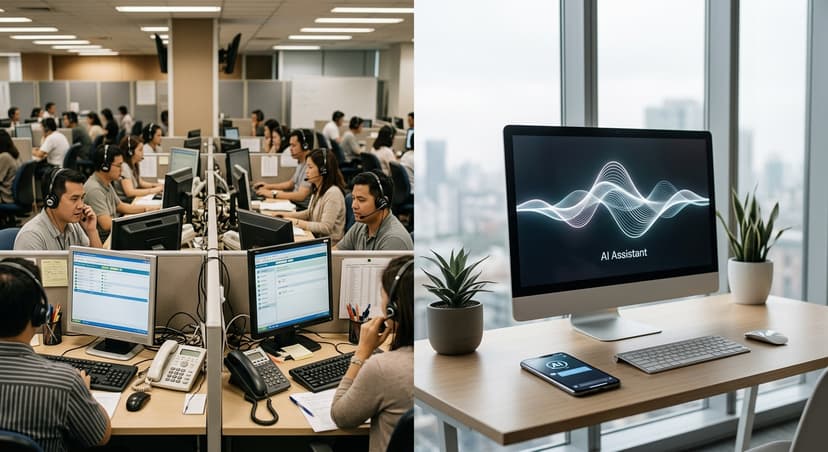
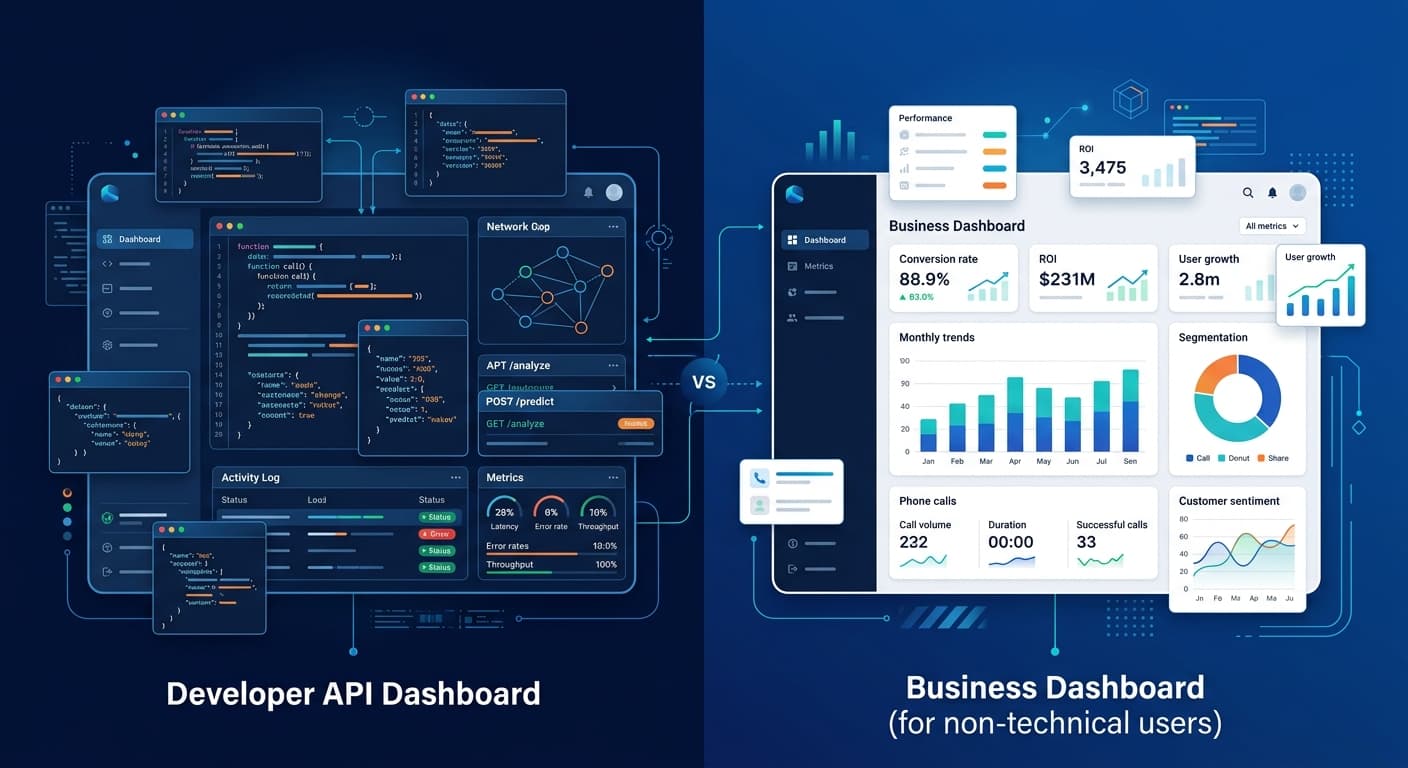
Bland.ai is one of the most technically impressive voice AI platforms on the market. It powers high-volume outbound campaigns for enterprise teams, gives developers granular API control over every aspect of the call flow, and runs on self-hosted infrastructure that keeps your data fully private.
It also requires a developer to set up, takes days to get running, needs ongoing engineering maintenance, and has pricing that's nearly impossible to forecast before you deploy.
For small business owners who need a phone answered — not a platform to build a phone system from scratch — that's a problem.
This comparison breaks down exactly where Bland.ai excels, where Revenue Squared AI wins, and who should use which platform.
Quick Verdict
Bland.ai is a developer-grade infrastructure layer. If you have a technical team and need to run 10,000+ calls per day with custom logic, it's worth evaluating. If you're a roofing company, dental office, or landscaping business that needs calls answered and appointments booked without hiring a developer, it will frustrate you.
Revenue Squared AI is built for small business owners. You configure it in plain English, go live in under 5 minutes, and the AI improves itself automatically over time. No prompt engineering. Transparent per-minute pricing starting at $0.20/min. No Discord support queue.
At a Glance: Rev Squared AI vs Bland.ai
| Feature | Revenue Squared AI | Bland.ai |
|---|---|---|
| Starting price | $147/month + $0.25/min | $0.09/min ($299/mo plan) |
| Setup time | Under 5 minutes | 3-7 days minimum |
| Setup requires coding? | No | Yes |
| Ongoing maintenance | Self-learning AI handles it | 5-15 hrs/month engineer time |
| Voice cloning | Included | Extra cost ($200-300/mo+) |
| Concurrent calls | Up to 20 | 10-100+ depending on plan |
| Latency | Under 500ms | ~800ms average |
| Languages | Multiple | English only (production) |
| CRM integration | GHL, HubSpot, Salesforce, more | Custom via API |
| Scheduling | Native calendar booking | Custom build required |
| Self-improving AI | Yes (Sales Manager AI) | No — manual updates |
| Customer support | Dedicated support | Community Discord |
| No annual contract | Yes | No |
| Who it's built for | Small business owners | Developer teams |
Pricing Breakdown: What You'll Actually Pay
This is where Bland.ai gets complicated.
The advertised rate is $0.09 per minute for connected calls. That sounds cheap until you factor in what's not included:
- Outbound minimum charge: $0.015 per call attempt — even failed calls and calls under 10 seconds
- Transfer fees: $0.025/min when using Bland's phone numbers (free if you configure your own Twilio account)
- SMS: $0.02 per message (inbound and outbound)
- Voice cloning: Significant additional monthly cost — often $200-$300+ depending on usage
- Monthly plan required: You still need the $299/month Build plan or $499/month Scale plan to access production-level concurrency
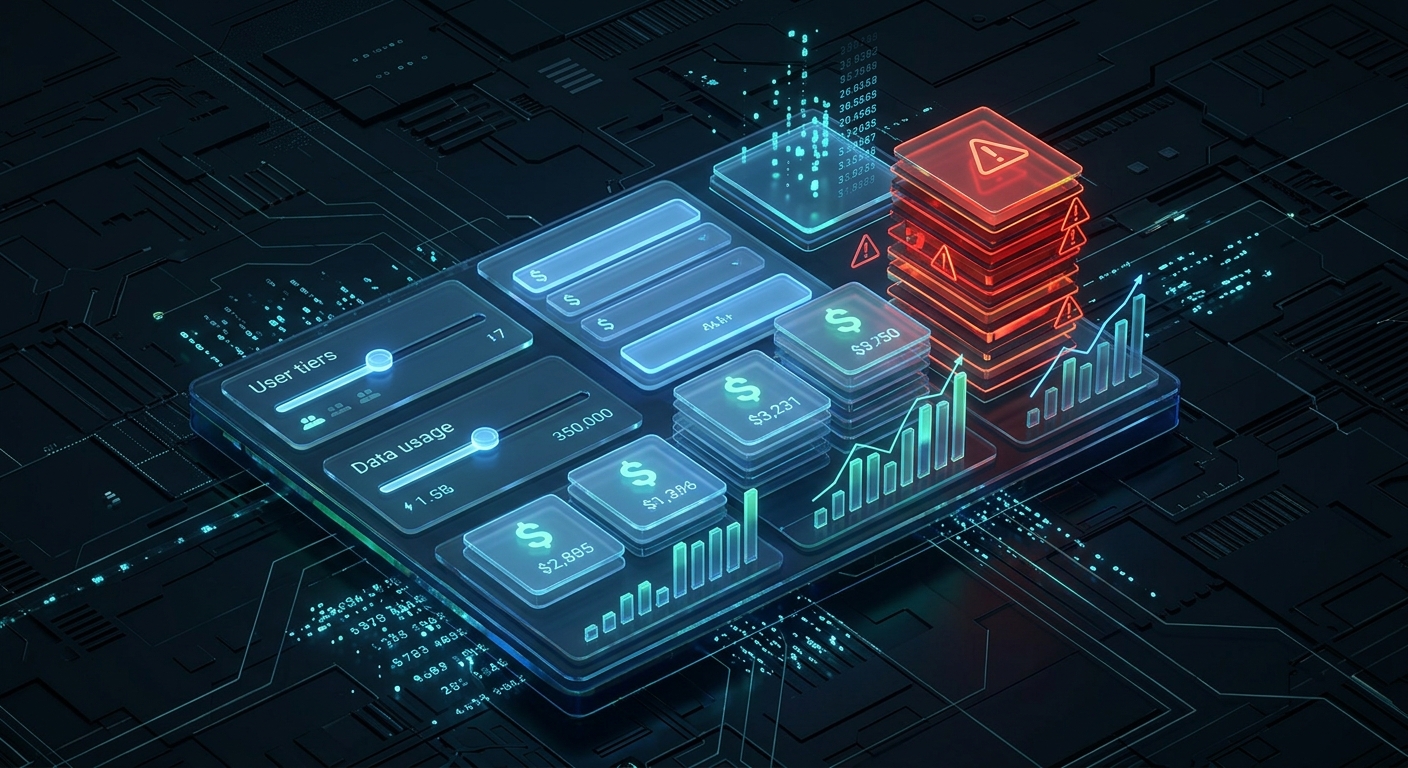
Businesses often report actual monthly costs of $1,200-$1,500 once all the variables are accounted for.
Revenue Squared AI is simpler and transparent:
- Starter — $147/month + $0.25/min: 1 AI agent (inbound), call recordings & transcripts, voice library, lead scoring, appointment scheduling (Google Calendar), Karina AI Support
- Pro — $497/month + $0.20/min: Up to 3 inbound agents, multi-location support, AI Sales Manager, voice cloning, CRM integrations, AI website widget, 5-star review automations, advanced reporting, team members, direct support
- Growth — Starting at $997/month: White glove setup, inbound + outbound + SMS AI, CRM integration, dedicated account manager, Slack support access
Setup Time and Technical Requirements
Setting up Bland.ai to handle real business calls takes:
- 3-7 days minimum with a developer
- 50-200+ hours of engineering work to reach production-ready quality
- Ongoing maintenance of 5-15 hours per month for updates, bug fixes, and prompt tuning
- Understanding of APIs, webhooks, and conversation pathway architecture
Revenue Squared AI takes under 5 minutes. You describe your business in plain English, configure your availability, connect your calendar, and you're live. Updates work the same way — type what you want changed and the platform handles the rest. No engineers required.
For small business owners who want to set up an AI receptionist fast, this difference is significant.
Call Quality and Latency
Bland.ai runs on self-hosted infrastructure with an average latency of 800 milliseconds. That 0.8-second pause happens every time the AI responds to a caller. In normal human conversation, 800ms is an awkward silence. Callers notice it. Some interpret it as a dropped connection. Research shows that callers begin dropping off within the first 20-30 seconds of a conversation when response delays are noticeable.
Bland.ai's voice quality is excellent for short, scripted interactions. On calls that run 5+ minutes with dynamic conversation, the voice can start to sound mechanical. This limits how naturally it handles complex customer inquiries.
Revenue Squared AI targets under 500ms latency and is engineered specifically for natural conversation — not just short transactional calls. It's built to handle the full complexity of a real customer service conversation: handling objections, qualifying leads, booking appointments, answering FAQ questions, and transferring intelligently when needed.
The Self-Learning Difference
The biggest long-term differentiator isn't pricing or setup time. It's what happens after month one.
Bland.ai doesn't improve automatically. Every change to how the agent performs requires a developer to manually update prompts and pathways. If the AI is handling calls poorly — missing key qualifying questions, giving wrong answers, failing to book appointments — someone has to diagnose it, rewrite the logic, and redeploy.
Revenue Squared AI includes Sales Manager AI, which monitors every call, identifies patterns, and automatically adjusts how the agent responds. If callers keep asking a question the AI doesn't handle well, Sales Manager AI rewrites that section without you lifting a finger. The agent that answers calls in month six is meaningfully better than the one that started in month one — without any manual work.
This is documented across our self-learning voice AI overview. It's one of the core reasons customers see improving ROI over time rather than flat performance.

Support: Discord vs Dedicated
Bland.ai's support model is community-first. For non-enterprise customers, help comes from a Discord server. Response times are inconsistent — users report waiting over a week for email responses with no reply. Enterprise contracts include dedicated support, but those are negotiated separately and priced accordingly.
For a business where the AI receptionist is handling inbound revenue calls, a slow Discord queue is a real risk. If the agent starts mishandling calls on a Friday afternoon, the options are: post in Discord, wait, and hope someone responds before Monday.
Revenue Squared AI offers dedicated support across all plans. If something is wrong with how your agent is performing, you have a direct path to get it fixed — not a community forum.
Integrations: Pre-Built vs Build Your Own
Bland.ai integrates with virtually anything — through custom API development. There is no pre-built native integration with GoHighLevel, HubSpot, Salesforce, Calendly, or Google Calendar. Every integration is a project.
Revenue Squared AI ships native integrations with:
- GoHighLevel (GHL)
- HubSpot
- Salesforce
- Calendly and Cal.com
- Google Calendar
- Twilio
- Zapier and n8n
Who Should Choose Each Platform
Choose Bland.ai if:
- You have a dedicated engineering team (at least one full-time developer)
- You're running high-volume outbound campaigns (1,000+ calls per day)
- You need maximum infrastructure control and self-hosting
- You're building a custom voice AI product, not just answering inbound calls
- Your use case requires extreme concurrency at enterprise scale
- You're a small business owner without engineering resources
- You want to go live quickly without a development project
- You need predictable, transparent pricing
- You want the AI to improve itself without manual maintenance
- You need native CRM and calendar integrations out of the box
- You're in home services, healthcare, legal, or any field where every call matters
Bottom Line
Bland.ai and Revenue Squared AI solve different problems for different buyers.
Bland.ai is a developer infrastructure tool. It's powerful, flexible, and technically impressive. It is also not designed for small business owners who want to answer their phone without becoming voice AI engineers.
Revenue Squared AI is built for the business, not the developer. You configure it in plain English, go live in minutes, and the AI handles the rest — including improving itself as it learns your business.
If you're a small business owner who has looked at Bland.ai and thought "this seems complicated" — you're right. It is. That's not who it's built for.
Start a free 7-day trial of Revenue Squared AI and have your AI receptionist live before the end of today.
Compare more platforms in our best AI answering service for small business guide, or see how we stack up against Smith.ai and Goodcall.
Frequently Asked Questions
Is Bland.ai good for small businesses?
Bland.ai is built for developer teams and enterprise organizations running high-volume outbound campaigns. It requires coding knowledge to set up and maintain, has complex per-minute pricing, and provides support primarily through a community Discord. Small businesses without dedicated technical staff will find the setup process time-consuming and ongoing maintenance difficult without engineering resources.
How does Bland.ai pricing compare to Revenue Squared AI?
Bland.ai charges $0.09/min for connected calls, plus additional fees for transfers, failed call attempts, SMS, and voice cloning — with a required monthly plan of $299-$499. Real-world costs typically run $1,200-$1,500/month for normal business call volumes. Revenue Squared AI starts at $147/month with transparent per-minute rates starting at $0.25/min (discounted to $0.20/min on Business). No hidden fees, no surprise overages, and voice cloning included on Business tier and above.
What is Bland.ai's latency?
Bland.ai averages approximately 800ms of latency — meaning callers hear a roughly 0.8-second pause each time the AI responds. This can feel unnatural in conversation and has been cited as a reason callers drop off within 20-30 seconds. Revenue Squared AI targets under 500ms for more natural conversation flow.
Does Bland.ai integrate with GoHighLevel?
No, Bland.ai does not offer a native GoHighLevel integration. Connecting Bland.ai to GHL requires custom API development by a technical team. Revenue Squared AI includes a native GoHighLevel integration that connects in minutes, allowing the AI to log contacts, update opportunity stages, and book appointments directly into GHL workflows.
Can I switch from Bland.ai to Revenue Squared AI?
Yes. Revenue Squared AI can be configured in under 5 minutes using a plain English description of your business. Most businesses that switch from Bland.ai see the same call handling capability go live within a single business day — without requiring any of the engineering work that Bland.ai's setup demands. Start your trial here.